
|
Click to listen to this article
|
Story and photos by John Stolarczyk, World Carrot Museum
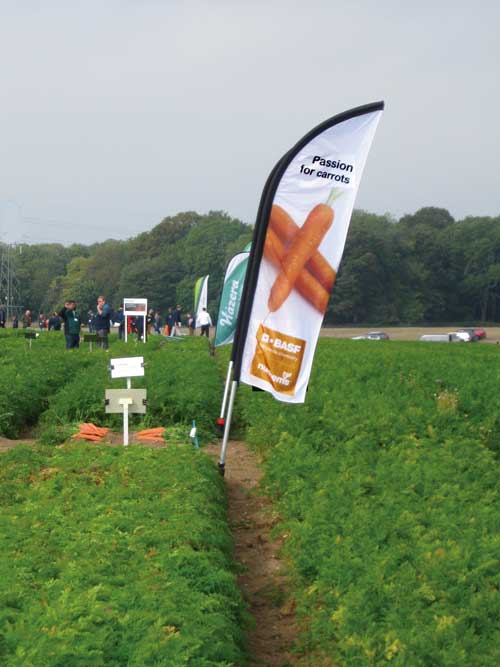
Carrots were front and center in the UK this fall as the British Carrot Growers Association (BCGA) held its annual Field Demonstration Day on Oct. 2 followed by the second annual British Carrot Day on Oct. 3.
Annual Field Trials
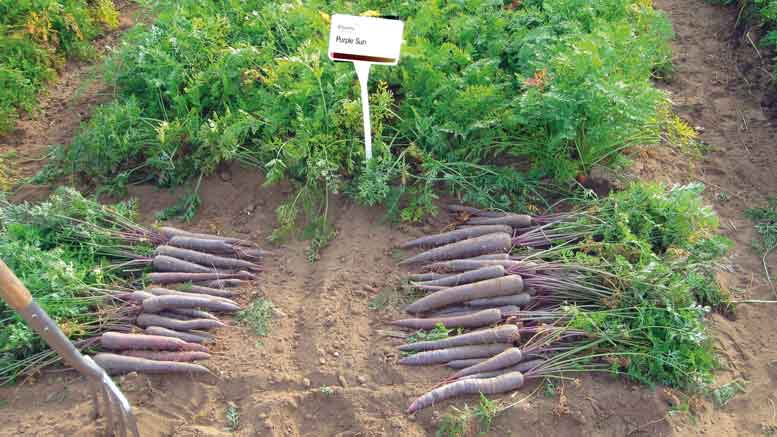
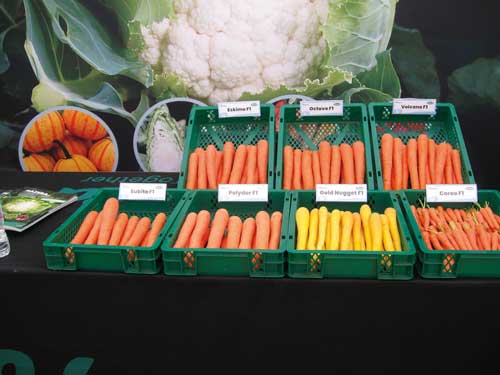
The demonstration day is designed to provide an opportunity for growers, agronomists and industry professionals to view and compare 85 carrot plots, examining carrot varieties for characteristics ranging from root color, shape and length to potential yields and disease resistance. The trial featured both well-established and new varieties, offering carrot growers insight into variety performance and the latest technology advances and crop innovations. It also gave farmers an idea of how varieties will perform in different conditions, locations and soil types and under different growing regimes and watering schedules.
The event also featured an indoor exhibition area with 30 companies showcasing agri-tech innovations and machinery including optical color sorters, laser weeders, autonomous farming robots and precision seed drills. In the fields, six seed companies provided examples of their produce: BASF-Nunhems, Bayer, Elsoms, Enza Zaden, Hazera/HM Clause and Wing Seeds.
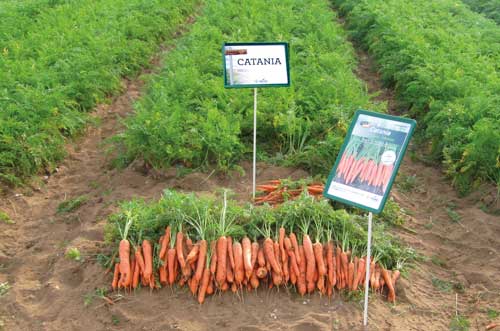
“It’s also a great opportunity to showcase Ambyance, our newest carrot variety – a versatile, high-yielding Nantes type designed to meet tomorrow’s needs,” said Naz Ahmed, customer marketing and value chain manager at BASF-Nunhems. “We’ll also be presenting our latest crop protection innovations, including a new virus management solution and a Revysol-based fungicide.”
British Carrot Day
The demonstration day led directly into British Carrot Day the next day, which returned for its second year following a successful 2024 launch. The campaign continues a national push to raise awareness of the carrot’s nutritional value and importance to British agriculture. It also highlights challenges faced by growers, such as low returns on a high-risk crop, and the need to boost carrot consumption across UK households.
“The campaign is about telling the farm story behind a low-cost staple. Because they’re relatively cheap, people don’t realize how difficult carrots can be to grow,” said BCGA chairman Rodger Hobson, an eighth-generation carrot grower. “If British Carrot Day persuades shoppers to pick up an extra bag and try a new recipe, the effort will be worthwhile.”
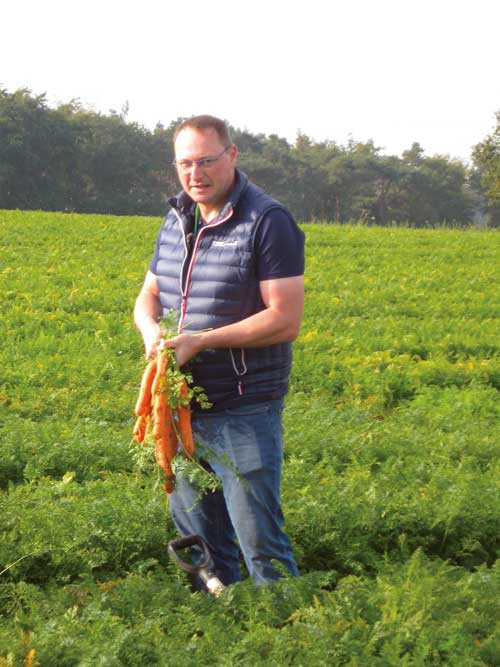
Simply put, this is the day British carrot growers take the opportunity to celebrate all things carrot. Participants were encouraged to share their favorite carrot dishes on social media using the hashtag #TheLoveOfCarrots.
Nutritionist Laura Wyness, from Scotland, helped promote the farmer-led campaign, saying that carrots are “one of our nation’s most versatile yet underappreciated foods.” Wyness, who has two decades of experience in public health nutrition, said everyday staples risk being overlooked.
“When a food falls into the category of ‘common staple,’ there’s a real risk its nutritional value is forgotten,” she said. “Going back to basics, it’s important to ‘eat the rainbow,’ and this is where carrots come into their own. They are hugely nutritious in their own right, and their color can make other healthy foods more appealing.”
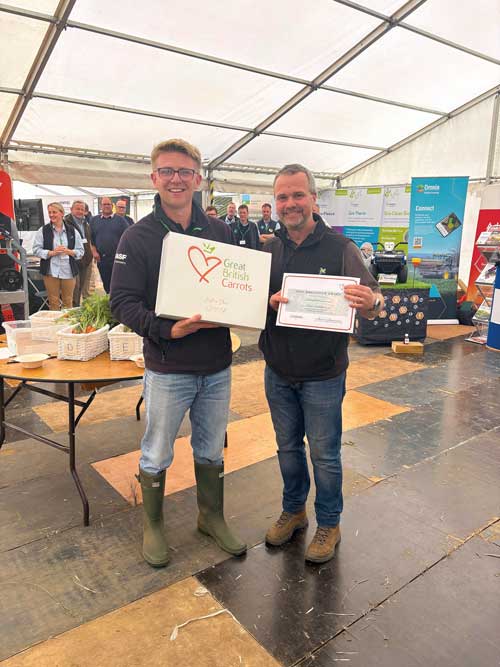
Wyness highlighted the fact that beta-carotene, the pigment that gives carrots their bright color, is converted by the body into vitamin A.
“Our bodies convert beta-carotene into retinol, which is the active form of Vitamin A that helps support eye and skin health and our immune system. Carrots also have beneficial fiber, something 96% of adults in the UK don’t eat enough of,” Wyness said.
Carrots are worth roughly the equivalent of $386.5 million to the UK economy, yet are one of the cheapest vegetables available, selling for approximately 8 cents per carrot in stores in the UK. Each year, 22 billion carrot seeds are sown in Britain, producing over 700,000 tonnes of carrots.