
Weeds are one of the largest barriers to profitable plant agriculture, costing U.S. growers billions each year. For organic growers — or those transitioning to organic systems — the challenges can be even more daunting. Labor and management costs can soar due to avoidance of synthetic herbicides, instead relying on cultivation, mulches, organic herbicides and hand weeding.
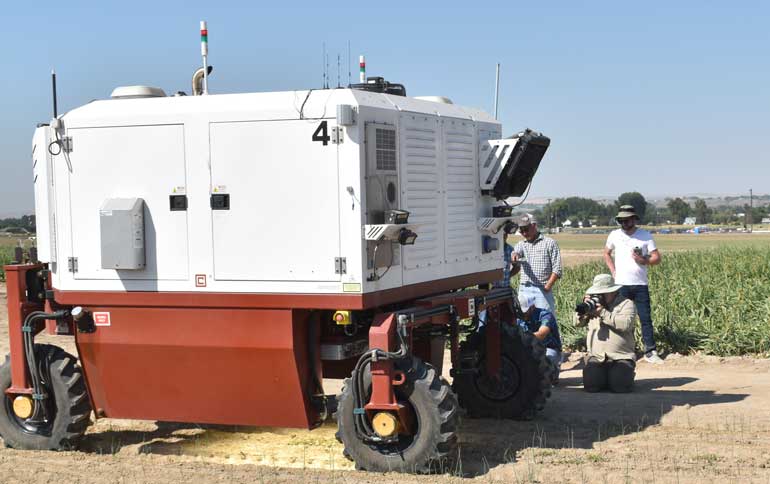
A new $1 million grant from the U.S. Department of Agriculture’s National Institute of Food and Agriculture (USDA NIFA) is supporting Michigan State University (MSU) researchers in evaluating precision laser weeding as a method to assist vegetable growers transitioning to organic production. The grant is funded through USDA NIFA’s Organic Transitions Program, and MSU scientists will partner with a team from Oregon State University.
The Organic Transitions Program prioritizes research that improves soil health, soil fertility and conservation while bolstering the competitiveness of organic livestock and crop producers.